From March 23–24, the Nava team headed to George Washington University (GW) in Washington, D.C. for the second annual Open Source Conference (OSCON). Hosted by GW’s Open Source Program Office (OSPO), the event brought together students, open source practitioners, federal agency representatives, policymakers, researchers, and government tech organizations for two days of sessions, panels, and hallway conversations about the state of open source in the public sector.
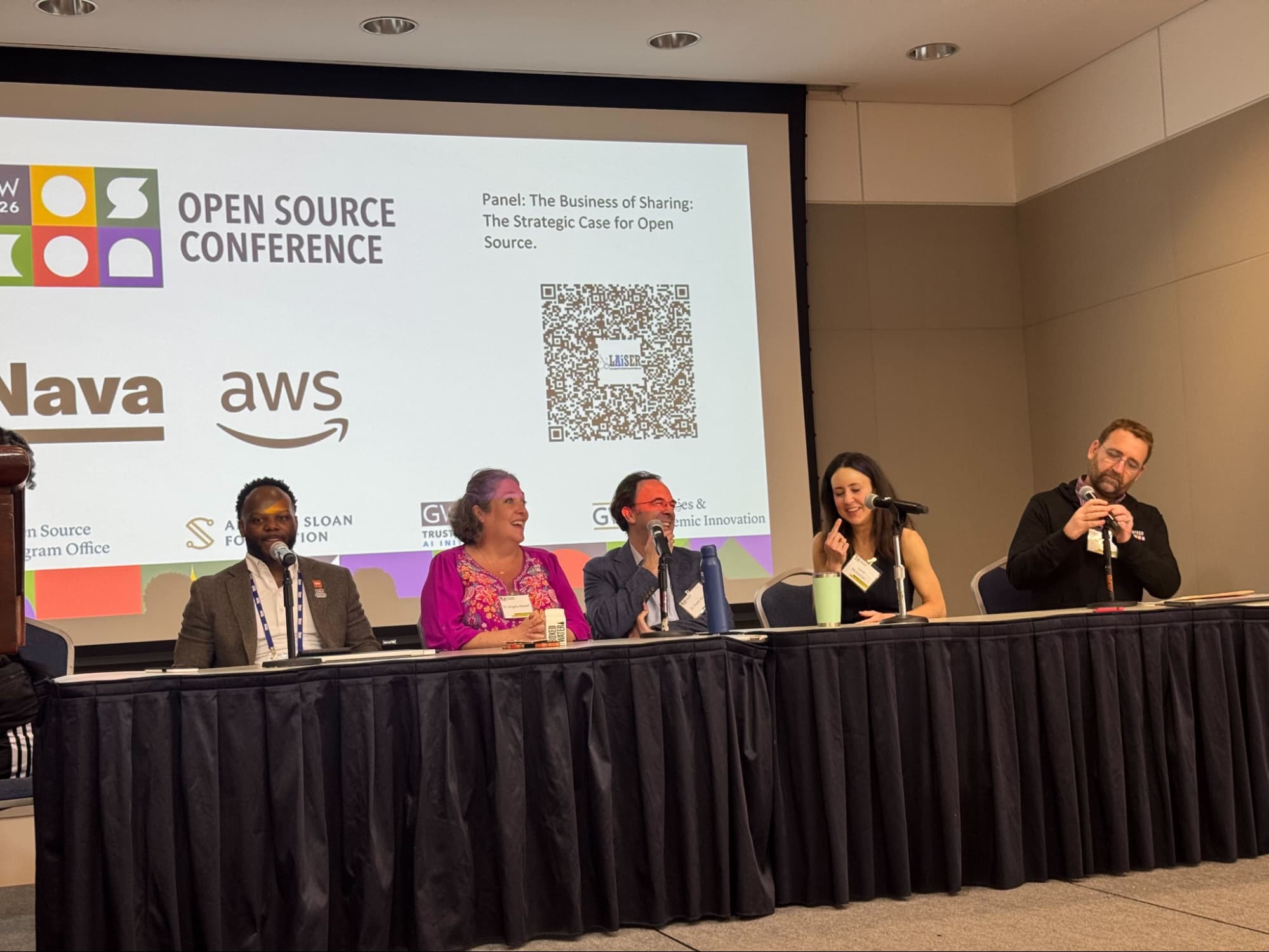
Marvin McLain, Nava’s VP of Program Delivery, spoke on a panel on the strategic business case for open source.
Nava joined the event as a sponsor, and several of our team members presented on our work with open source technology. They discussed our Open Source Community Engagement Reporting (OSCER) tool, which is Nava’s open source H.R. 1 compliance tool that works alongside Medicaid systems. Nava Labs shared learnings from building AI-powered caseworker tools, and our VP of Program Delivery, Marvin McLain, joined a panel on the business case for open source in government. The energy around open source as critical public infrastructure was palpable, and the conversations reinforced why Nava has invested so deeply in this space through our own OSPO.
Here are four takeaways that stuck with us:
1. Open source isn’t a technology choice; it’s an infrastructure decision
A theme that surfaced again and again at OSCON was the reframing of open source software from a developer preference into a foundational infrastructure concern. Keynote speaker Dr. Frank Nagle, whose research estimates the demand-side value of open source software at $8.8 trillion globally, made a compelling case that open source has become so embedded in modern systems that treating it as optional is no longer realistic.
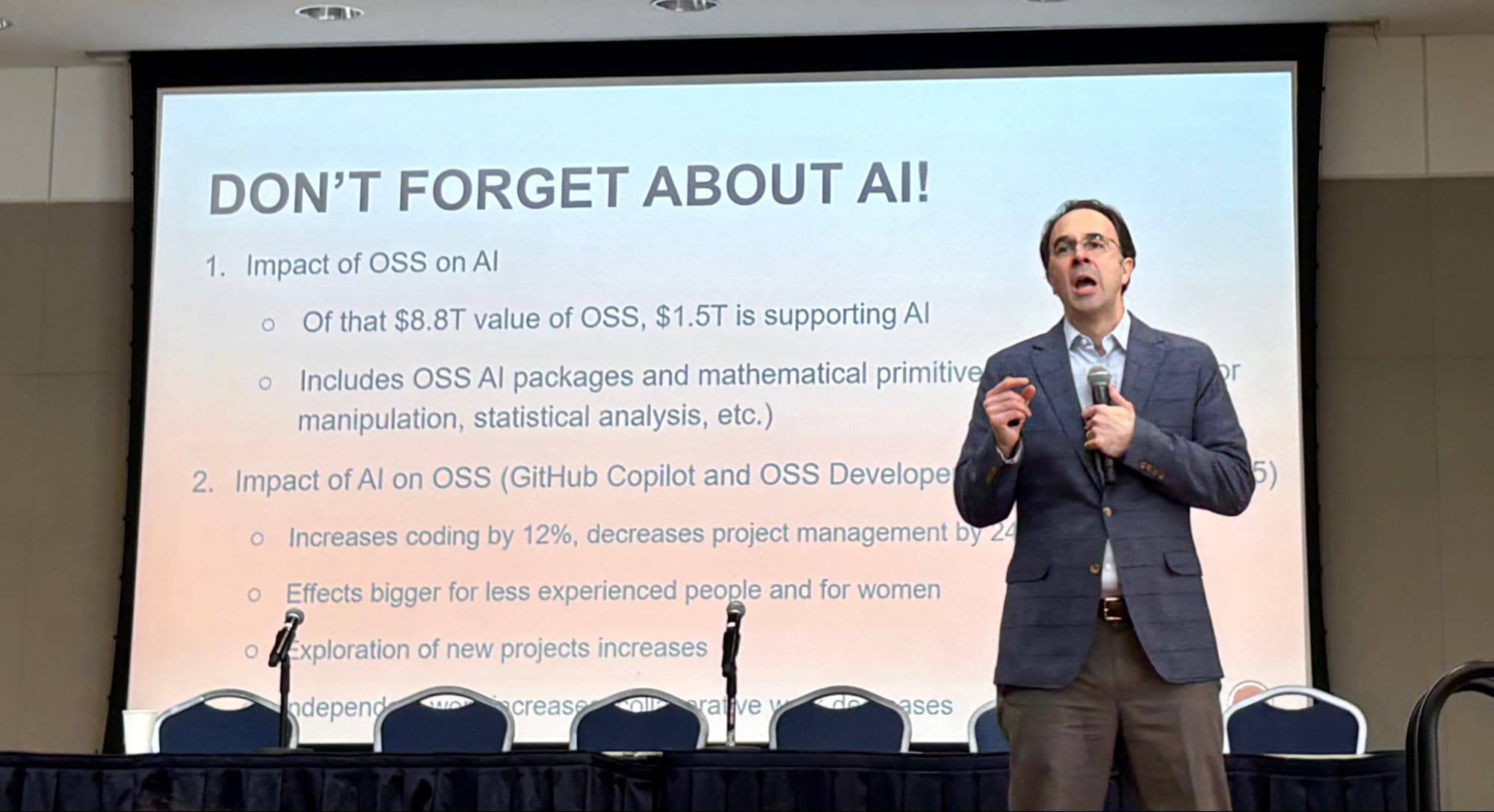
Dr. Frank Nagle gave a keynote talk about the value of open source.
For government agencies running services that millions of people depend on, this framing matters. When we presented OSCER, the response from the room underscored this point. Attendees weren’t asking whether government should use open source; they were asking how to do it well, how to sustain it, and how to make the case internally for investing in shared tools rather than rebuilding from scratch behind proprietary walls.
2. Community is the real product
One of the things that’s easy to lose sight of in open source is that the software is only part of the equation. The community around it — the contributors, maintainers, implementers, and users who shape a project’s direction — is what determines whether an open source tool actually succeeds in the real world.
This came through in conversations with other presenters and attendees throughout the conference. Projects that thrive aren’t just technically sound; they’re the ones where people feel ownership, feedback loops are short, and there’s a genuine culture of collaboration rather than just code dumps onto GitHub. For Nava, this is something we think about constantly with all of our open source delivery. Building the tool is the beginning. Building the community of government agencies, government tech vendors and nonprofits, and individual contributors who make it better over time is the harder yet more important work.
3. Open source AI models are where the most important conversations are happening
Dr. Nagle’s research into the economics of open source AI, combined with several sessions at the conference, made clear that the open-versus-closed debate in AI is one of our moment’s defining questions. The arguments for open source AI models go beyond transparency and auditability, though those matter enormously in a government context. Open models enable the kind of iterative, community-driven improvement that has made open source software so resilient in other domains. They allow organizations to fine-tune models for specific use cases without vendor lock-in. And they create the conditions for shared learning across institutions that are often solving similar problems in isolation.
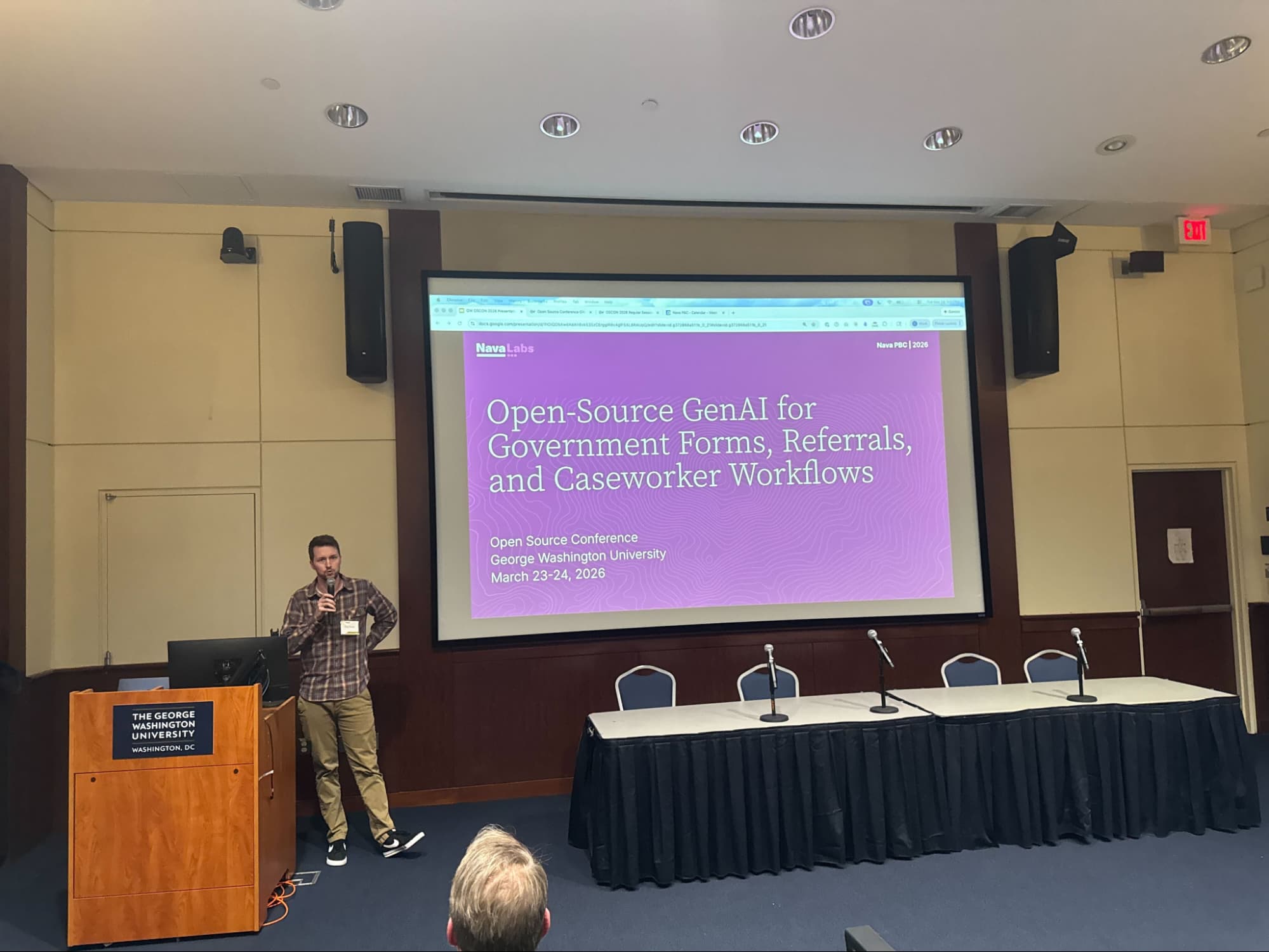
Navanaut Cory Trimm presented the Nava Labs team’s work on AI-powered tools to empower caseworkers.
This resonated deeply with the work Nava Labs has been doing. Our AI-powered Form-Filling Assistant is built on the principle that AI tools for public services should be transparent, auditable, and improvable by the people closest to the work. When we shared what we’ve learned from our pilot with the Riverside County Children & Families Commission in California, the response from the audience reflected a growing consensus: if we’re going to use AI in government services, it needs to be open, and the communities using it need to be part of shaping it.
4. The business case for open source in government is getting easier to make but it still requires champions
The panel on the business case for open source brought together perspectives from across the public and private sectors, and the conversation was refreshingly practical. The economic argument is strong: agencies that adopt open source tools avoid duplicating development costs while reducing vendor dependency and benefiting from continuous improvement driven by a broader contributor base. For example, Nava’s Strata offers open source tools for every layer of government service delivery — without exhausting agencies’ budgets or locking them into proprietary software. Strata has helped save our partners months of development time.
But making the case for open source inside large bureaucratic institutions still requires people who are willing to push against procurement norms, navigate risk-averse cultures, and demonstrate value through working software rather than slide decks.
What was encouraging at OSCON was the number of people in the room who are doing exactly that — standing up OSPOs, advocating for open source policies, and building internal capacity to contribute to and maintain open source projects. The fact that GW itself has an OSPO, and that this conference exists at all, is evidence that the institutional infrastructure for open source is growing. Nava’s own OSPO is part of this broader movement, and the connections we made at the conference will help us continue learning from and contributing to it.
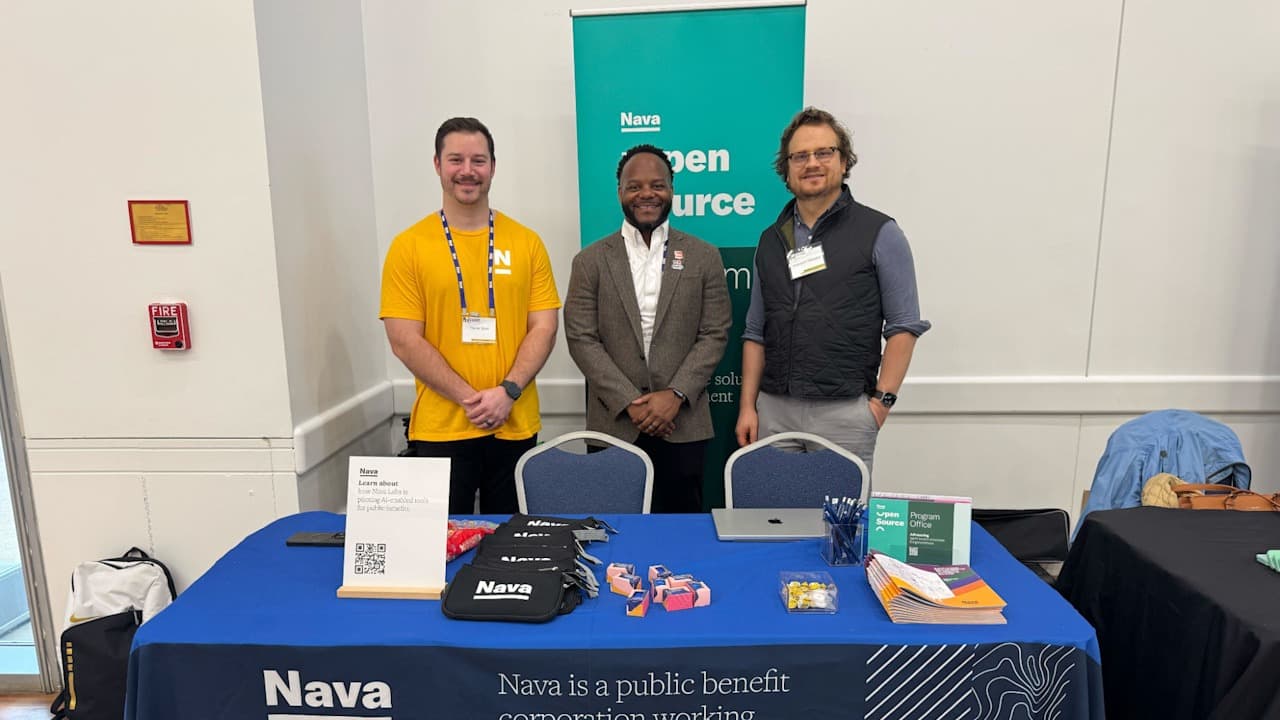
Nava is proud to have its own OSPO and to be actively engaged with this community.
GW OSCON 2026 was a reminder that open source in the public interest isn’t a niche concern; it’s becoming central to how government delivers services, how teams build AI responsibly, and how communities of practice form around shared problems. Nava is proud to be part of this growing movement, and we’re looking forward to continuing the conversations that this conference sparked.
Interested in Nava’s open source work? Learn more about OSCER, Strata, and Nava Labs.
Written by

Open Source Lead